
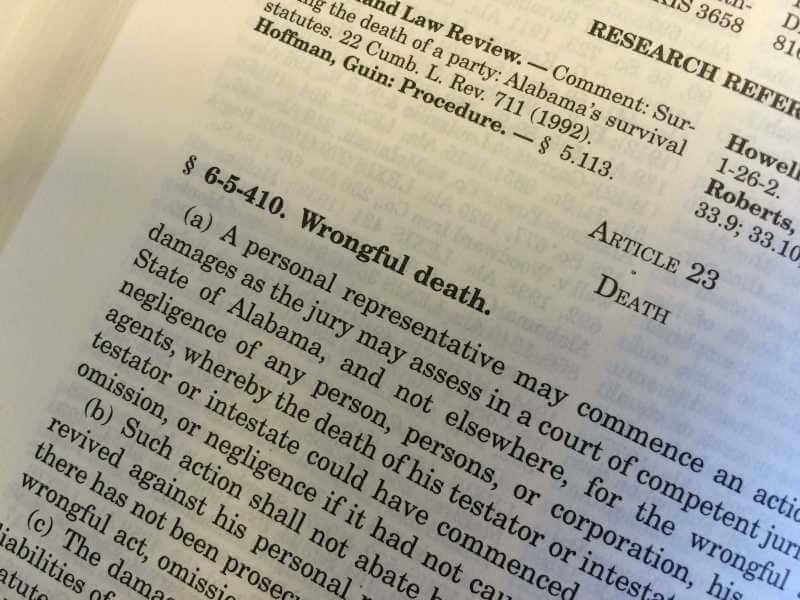
California’s wrongful death statute is broader than Virginia’s in some respects and narrower in others. If you are trying to work out whether you have a claim after a family member’s death in San Diego, the starting point is who the law allows to bring it.
Who can bring the action
Under Code of Civil Procedure § 377.60, a wrongful death action may be brought by the deceased person’s:
- Surviving spouse or registered domestic partner
- Children, and the issue of a child who has died
If there is no surviving spouse, partner or child, the claim passes to the people who would inherit the estate under California’s intestacy rules. Parents can also qualify in certain circumstances, particularly where they were financially dependent on the deceased. A personal representative may bring the action on behalf of the beneficiaries.
Where more than one person qualifies, they share a single claim, and the court can divide the recovery between them. Identifying every beneficiary at the outset avoids disputes later, when a settlement is on the table.
What can be recovered
Code of Civil Procedure § 377.61 sets out the damages. They generally include funeral and burial expenses, the financial support the family would reasonably have received, the value of household services, and loss of companionship, comfort, care and society. Where a parent has died, loss of guidance and training may also be claimed.
California does not allow a separate award for the family’s grief, and a wrongful death action does not include the deceased person’s own pain and suffering. Those limits are why the financial and relational losses have to be documented carefully.
The two-year deadline
The general deadline is two years from the date of death under Code of Civil Procedure § 335.1. If a public entity or public employee caused the death — a city vehicle, a defective road, a transit agency — a written government claim generally must be presented within six months under Government Code § 911.2 before a lawsuit can be filed.
That six-month rule is the one families most often miss. If there is any chance a public entity was involved, the claim should be assessed immediately.
Fault in California
California applies pure comparative negligence. If the deceased was partly at fault, the recovery is reduced by that percentage rather than barred. The dispute is usually about proportion: insurers push a large share of fault onto the deceased, and the evidence has to be strong enough to resist it.
Where the case is filed
Fatal claims are filed in the Superior Court of California, County of San Diego. Depending on where the death occurred, the case may be heard at the Central Courthouse at 1100 Union Street in downtown San Diego, the North County Division in Vista or the South County Division in Chula Vista.
What to do next
- Obtain the death certificate and the coroner’s report.
- Do not give a recorded statement to any insurer.
- Preserve the vehicle, phone, dash camera and GPS data.
- Establish whether a public entity was involved before the six-month window closes.
- Identify every beneficiary and the estate’s personal representative.
Related: San Diego wrongful death lawyer · wrongful death claims overview