
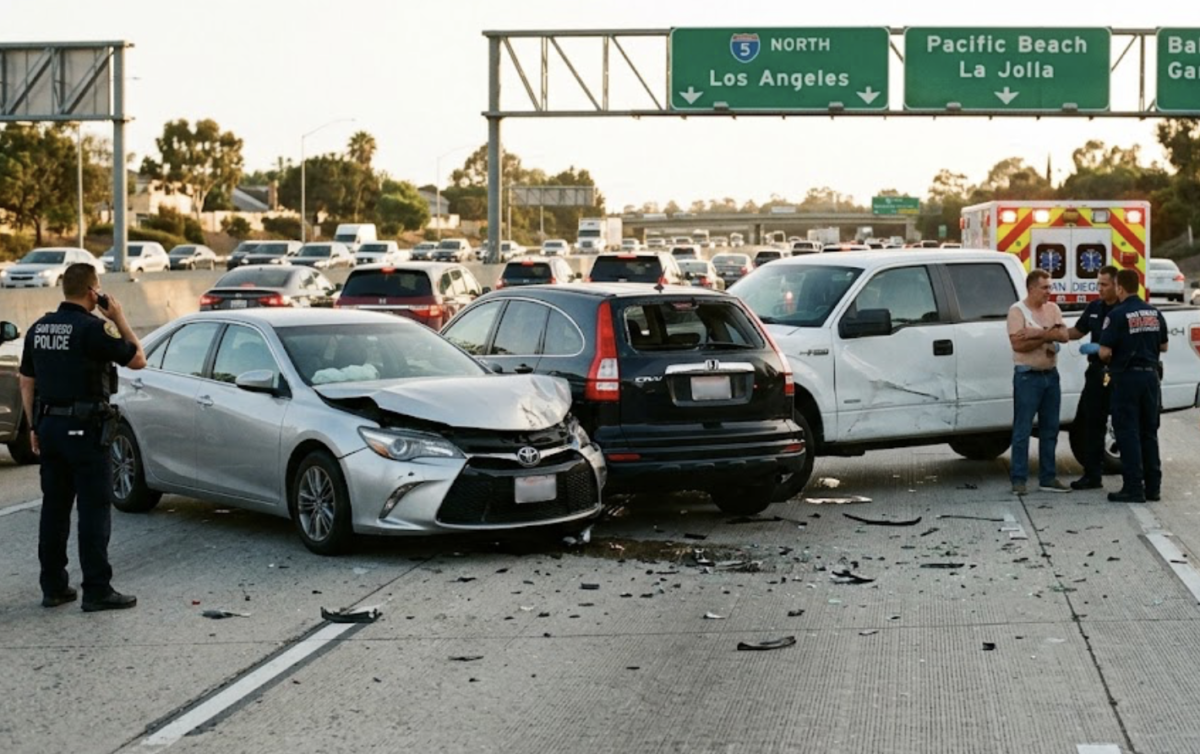
A car crash on the I-5, the 805, or busy downtown streets can leave you shocked, overwhelmed, and unsure of what to do next. However, the actions you take in the first 24 hours are crucial—not just for your health, but also for protecting your legal rights and strengthening any potential injury claim under California law.
If you are wondering what to do after a car accident to secure your physical and financial recovery, here is a clear, step-by-step guide to follow immediately after a crash in America’s Finest City.
The Immediate 24-Hour Accident Checklist
What to Do After a Car Accident: Check for Injuries and Call 911
Your safety comes first. Even if you think you’re “fine,” the rush of adrenaline from a collision can mask severe internal injuries or whiplash.
Call 911 so dispatchers can send local emergency medical teams and law enforcement to the scene. First responders will:
- ✓ Assess and treat hidden injuries.
- ✓ Secure the immediate traffic area to prevent secondary crashes.
- ✓ Generate an official record that an accident occurred.
2. Request a Police Report from Local Law Enforcement
Whether a San Diego Police Department officer or a cruiser from the California Highway Patrol (CHP) arrives, an official police report provides an objective record of the crash.
Officer Documentation Note: Ensure the responding officer details exact vehicle positions, visible injuries, statement write-ups from all drivers/passengers, and environmental road conditions.
Never agree to “handle it privately” with the other driver. Without a police report, insurance companies routinely dispute liability later.
3. Gather Crucial Evidence at the Scene
If you are physically able to do so safely, maximize the evidence you collect before leaving the scene. This data can directly support a future claim handled by a professional attorney. Use your phone to collect:
- ✓ Photos and videos of both vehicles from multiple angles.
- ✓ Close-ups of property damage, skid marks, and relevant traffic signs.
- ✓ Pictures of your visible injuries.
- ✓ The other driver’s license, registration, and insurance identification card.
- ✓ Contact names and phone numbers of any eyewitnesses who stopped.
4. Seek Medical Care on the Same Day
Many severe injuries—including concussions, internal trauma, spinal strain, and whiplash—do not show symptoms right away. Visit a local emergency room (like Scripps or UC San Diego Health), an urgent care center, or your primary care physician immediately.
Medical records created on the exact day of the accident create an undeniable baseline of proof connecting your physical trauma directly to the crash.
Protecting Your Claim Value Long-Term
5. Be Extremely Careful When Notifying Insurance Companies
While you are required to report the accident to your insurance provider quickly, you should be incredibly careful regarding what you share.
6. Maintain Absolute Social Media Silence
Insurance adjusters actively monitor public social media platforms looking for reasons to reduce your settlement value. Even a casual post telling family members “I’m doing okay!” or a photo out with friends can be used out of context to argue that your injuries are exaggerated. Keep details regarding your crash completely offline.
7. Build an Organized “Post-Accident File”
To recover full compensation, you must document every dollar the accident costs you. Start a physical or digital folder to store:
- ✓ Medical bills, hospital statements, and copay receipts.
- ✓ Prescription and medical equipment receipts.
- ✓ Tow truck invoices and vehicle repair estimates.
- ✓ Written documentation proving lost wages and missed work time.
- ✓ All written letters or emails from insurance adjusters.
Understanding California’s Comparative Fault Law
If you are involved in a collision on local roads, understanding California’s legal framework is just as critical as knowing what to do after a car accident. California operates under a “pure comparative negligence” system. This means that even if you were partially to blame for the crash, you can still recover financial compensation for your damages.
However, your financial recovery will be reduced by your percentage of fault. For example, if your total damages equal $100,000 but an investigation finds you 20% responsible for the accident, your final payout will be capped at $80,000.
Because insurance adjusters will actively try to shift the blame onto you to save money, protecting your rights requires aggressive advocacy. An experienced San Diego car accident lawyer knows how to analyze police records, interview scene witnesses, and leverage evidence to minimize your liability and maximize your final financial recovery.
Final Thoughts
Knowing what to do after a car accident during those first critical 24 hours can heavily dictate the ultimate success of your personal injury claim. Acting quickly, documenting the scene, and seeking professional legal counsel can make the ultimate difference between absorbing the financial loss yourself or receiving full, fair compensation.
Speak with a San Diego Car Accident Lawyer Today
If you’ve been injured in America’s Finest City, don’t navigate the complex insurance process alone. Let an expert legal advocate protect your rights and fight for the compensation you are owed.